The origin and mysterious lore of the plague doctor
“the Harbinger of death”
(not to be confused with the harbinger of pestilence, which are the aforementioned culprits of the plague and disease.)
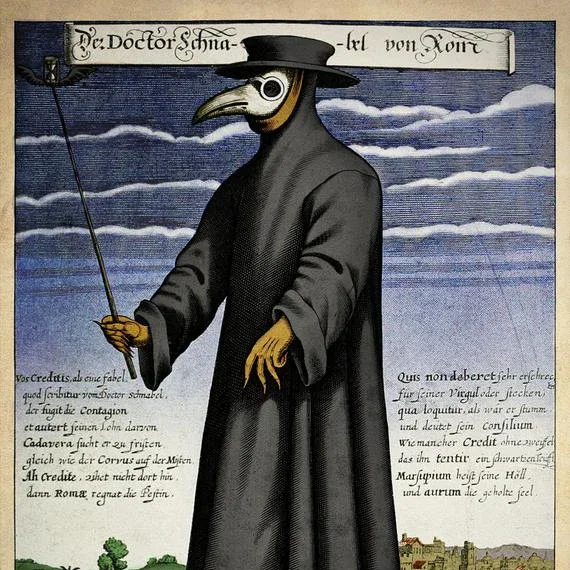
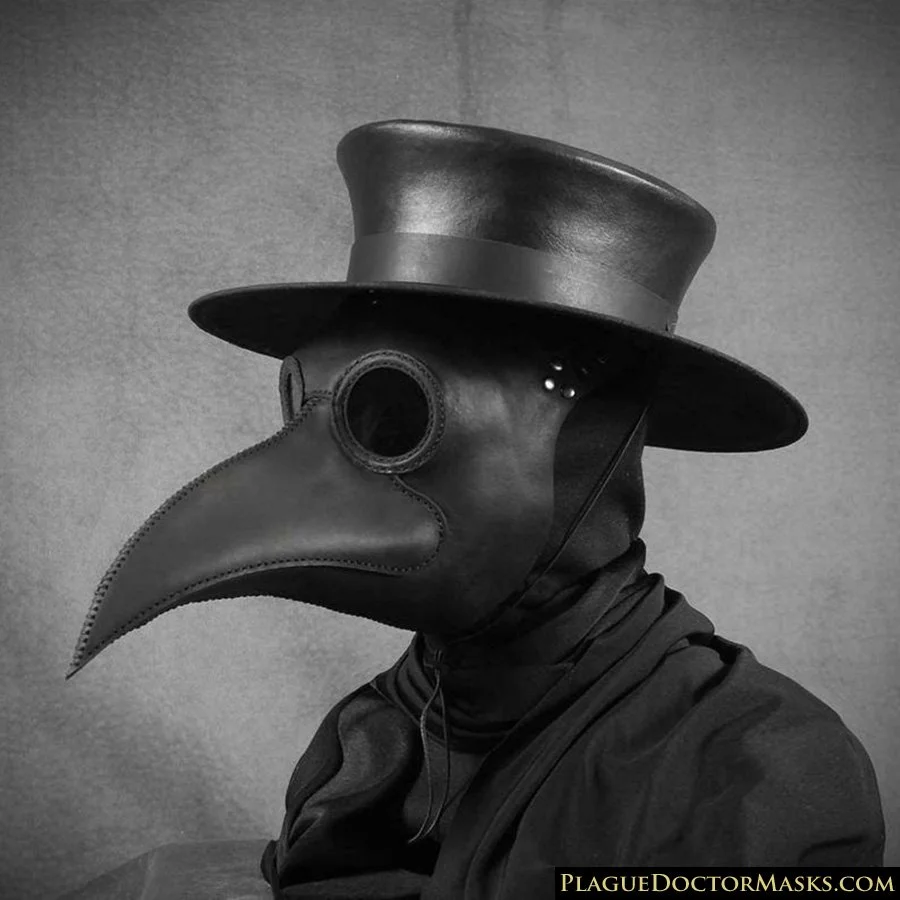
Very few figures in history evoke an ominous sense of impending doom more than the plague doctor. The rich symbolism of the “man with the mask” or the “man in black” transcends time and somehow surpasses the nature of the black plague in its dark legacy and ethos. From the bird-like mask to the leather coat, these early European doctors often were emblematic of a state of panic amid a looming health crisis.
The irony for these early plague doctors lies in the desperate attempt to alleviate ailments when they had no idea what was causing them. They wore the bird-like masks to protect themselves from infection, but they had no understanding of things like germ theory or antibiotics.
The long, beak-like masks were created out of desperation, but their emergence was based on flawed science and a lack of knowledge about what they were treating. The symbolism of the mask itself doesn’t just elicit panic and fear; it speaks to the state of ancient medicine and just how distant they were from realizing a solution based on efficacy.
Faulty “bad air” theories that were pervasive around this time truly accentuate that misinformation, which would ultimately lead to their death. These plague doctors died even while wearing the extravagant masks that ultimately symbolized their limited medical knowledge. The canes carried by plague doctors, to keep people at a distance, spoke to the callous and cold nature of these charlatans in their efforts to protect themselves while serving others.
They died trying to help people, which is heroic in many ways, but they simply had no medical or intellectual defense against the bacteria that caused the Black Plague.